Showing posts with label AI. Show all posts

The Emergence of Intelligent Agents (1995–present)

The emergence of intelligent agents (1995–present)

Perhaps encouraged by the progress in solving the subproblems of AI, researchers have also started to look at the “whole agent” problem again. The work of Allen Newell, John Laird, and Paul Rosenbloom on SOAR (Newell, 1990; Laird et al., 1987) is the best-known example of a complete agent architecture. One of the most important environments for intelligent agents is the Internet. AI systems have become so common in Web-based applications that the “-bot” suffix has entered everyday language. Moreover, AI technologies underlie many Internet tools, such as search engines, recommender systems, and Web site aggregators.


One consequence of trying to build complete agents is the realization that the previously isolated subfields of AI might need to be reorganized somewhat when their results are to be tied together. In particular, it is now widely appreciated that sensory systems (vision, sonar, speech recognition, etc.) cannot deliver perfectly reliable information about the environment. Hence, reasoning and planning systems must be able to handle uncertainty. A second major consequence of the agent perspective is that AI has been drawn into much closer contact with other fields, such as control theory and economics, that also deal with agents. Recent progress in the control of robotic cars has derived from a mixture of approaches ranging from better sensors, control-theoretic integration of sensing, localization and mapping, as well as a degree of high-level planning. Despite these successes, some influential founders of AI, including John McCarthy (2007), Marvin Minsky (2007), Nils Nilsson (1995, 2005) and Patrick Winston (Beal and Winston, 2009), have expressed discontent with the progress of AI. They think that AI should put less emphasis on creating ever-improved versions of applications that are good at a specific task, such as driving a car, playing chess, or recognizing speech. Instead, they believe

AI should return to its roots of striving for, in Simon’s words, “machines that think, that learn HUMAN-LEVEL AI and that create.” They call the effort human-level AI or HLAI; their first symposium was in 2004 (Minsky et al., 2004). The effort will require very large knowledge bases; Hendler et al. (1995) discuss where these knowledge bases might come from.

A related idea is the subfield of Artificial General Intelligence or AGI (Goertzel and Pennachin, 2007), which held its first conference and organized the Journal of Artificial General Intelligence in 2008. AGI looks for a universal algorithm for learning and acting in any environment, and has its roots in the work of Ray Solomonoff (1964), one of the attendees of the original 1956 Dartmouth conference. Guaranteeing that what we create is really FRIENDLY AI Friendly AI is also a concern (Yudkowsky, 2008; Omohundro, 2008), one we will return to in Chapter 26.

AI adopts the scientific method (1987–present)

AI adopts the scientific method (1987–present)

Recent years have seen a revolution in both the content and the methodology of work inartificial intelligence.14 It is now more common to build on existing theories than to proposebrand-new ones, to base claims on rigorous theorems or hard experimental evidence rather than on intuition, and to show relevance to real-world applications rather than toy examples.


AI was founded in part as a rebellion against the limitations of existing fields like control theory and statistics, but now it is embracing those fields. As David McAllester (1998) put it:

In the early period of AI it seemed plausible that new forms of symbolic computation,e.g., frames and semantic networks, made much of classical theory obsolete. This led to a form of isolationism in which AI became largely separated from the rest of computer science. This isolationism is currently being abandoned. There is a recognition that machine learning should not be isolated from information theory, that uncertain reasoning should not be isolated from stochastic modeling, that search should not be isolated from classical optimization and control, and that automated reasoning should not be isolated from formal methods and static analysis. In terms of methodology, AI has finally come firmly under the scientific method. To be accepted, hypotheses must be subjected to rigorous empirical experiments, and the results must be analyzed statistically for their importance (Cohen, 1995). It is now possible to replicate experiments by using shared repositories of test data and code.

The field of speech recognition illustrates the pattern. In the 1970s, a wide variety of different architectures and approaches were tried. Many of these were rather ad hoc and fragile, and were demonstrated on only a few specially selected examples. In recent years, approaches based on hidden Markov models (HMMs) have come to dominate the area. Two aspects of HMMs are relevant. First, they are based on a rigorous mathematical theory. This has allowed speech researchers to build on several decades of mathematical results developed in other fields. Second, they are generated by a process of training on a large corpus of real speech data. This ensures that the performance is robust, and in rigorous blind tests the HMMs have been improving their scores steadily. Speech technology and the related field of handwritten character recognition are already making the transition to widespread industrial and consumer applications. Note that there is no scientific claim that humans use HMMs to recognize speech; rather, HMMs provide a mathematical framework for understanding the problem and support the engineering claim that they work well in practice.

Machine translation follows the same course as speech recognition. In the 1950s there was initial enthusiasm for an approach based on sequences of words, with models learned according to the principles of information theory. That approach fell out of favor in the 1960s, but returned in the late 1990s and now dominates the field. Neural networks also fit this trend. Much of the work on neural nets in the 1980s was done in an attempt to scope out what could be done and to learn how neural nets differ from “traditional” techniques. Using improved methodology and theoretical frameworks, the field arrived at an understanding in which neural nets can now be compared with corresponding techniques from statistics, pattern recognition, and machine learning, and the most promising technique can be applied to each application. As a result of these developments, so-called data mining technology has spawned a vigorous new industry.

Judea Pearl’s (1988) Probabilistic Reasoning in Intelligent Systems led to a new acceptance of probability and decision theory in AI, following a resurgence of interest epitomized BAYESIAN NETWORK by Peter Cheeseman’s (1985) article “In Defense of Probability.” The Bayesian network formalism was invented to allow efficient representation of, and rigorous reasoning with, uncertain knowledge. This approach largely overcomes many problems of the probabilistic reasoning systems of the 1960s and 1970s; it now dominates AI research on uncertain reasoning and expert systems. The approach allows for learning from experience, and it combines the best of classical AI and neural nets. Work by Judea Pearl (1982a) and by Eric Horvitz and David Heckerman (Horvitz and Heckerman, 1986; Horvitz et al., 1986) promoted the idea of normative expert systems: ones that act rationally according to the laws of decision theory and do not try to imitate the thought steps of human experts. The WindowsTM operating system includes several normative diagnostic expert systems for correcting problems. Chapters 13 to 16 cover this area.

Similar gentle revolutions have occurred in robotics, computer vision, and knowledge representation. A better understanding of the problems and their complexity properties,  combined with increased mathematical sophistication, has led to workable research agendas and robust methods. Although increased formalization and specialization led fields such as vision and robotics to become somewhat isolated from “mainstream” AI in the 1990s, this trend has reversed in recent years as tools from machine learning in particular have proved effective for many problems. The process of reintegration is already yielding significant benefit

AI becomes an industry (1980–present)

 AI becomes an industry (1980–present)


The first successful commercial expert system, R1, began operation at the Digital Equipment Corporation (McDermott, 1982). The program helped configure orders for new computer systems; by 1986, it was saving the company an estimated $40 million a year. By 1988, DEC’s AI group had 40 expert systems deployed, with more on the way. DuPont had 100 in use and 500 in development, saving an estimated $10 million a year. Nearly every major U.S. corporation had its own AI group and was either using or investigating expert systems.

In 1981, the Japanese announced the “Fifth Generation” project, a 10-year plan to build intelligent computers running Prolog. In response, the United States formed the Microelectronics and Computer Technology Corporation (MCC) as a research consortium designed to assure national competitiveness. In both cases, AI was part of a broad effort, including chip design and human-interface research. In Britain, the Alvey report reinstated the funding that was cut by the Lighthill report.13 In all three countries, however, the projects never met their ambitious goals.

Overall, the AI industry boomed from a few million dollars in 1980 to billions of dollars in 1988, including hundreds of companies building expert systems, vision systems, robots, and software and hardware specialized for these purposes. Soon after that came a period called the “AI Winter,” in which many companies fell by the wayside as they failed to deliver on extravagant promises.

THE HISTORY OF ARTIFICIAL INTELLIGENCE

 With the background material behind us, we are ready to cover the development of AI itself.


The gestation of artificial intelligence (1943–1955)

The first work that is now generally recognized as AI was done by Warren McCulloch and Walter Pitts (1943). They drew on three sources: knowledge of the basic physiology and function of neurons in the brain; a formal analysis of propositional logic due to Russell and Whitehead; and Turing’s theory of computation. They proposed a model of artificial neurons in which each neuron is characterized as being “on” or “off,” with a switch to “on” occurring in response to stimulation by a sufficient number of neighboring neurons. The state of a neuron was conceived of as “factually equivalent to a proposition which proposed its adequate stimulus.” They showed, for example, that any computable function could be computed by some network of connected neurons, and that all the logical connectives (and, or, not, etc.) could be implemented by simple net structures. McCulloch and Pitts also suggested that suitably defined networks could learn. Donald Hebb (1949) demonstrated a simple updating rule for modifying the connection strengths between neurons. His rule, now called Hebbian learning, remains an influential model to this day.

Two undergraduate students at Harvard, Marvin Minsky and Dean Edmonds, built the first neural network computer in 1950. The SNARC, as it was called, used 3000 vacuum tubes and a surplus automatic pilot mechanism from a B-24 bomber to simulate a network of 40 neurons. Later, at Princeton, Minsky studied universal computation in neural networks. His Ph.D. committee was skeptical about whether this kind of work should be considered mathematics, but von Neumann reportedly said, “If it isn’t now, it will be someday.” Minsky was later to prove influential theorems showing the limitations of neural network research.

There were a number of early examples of work that can be characterized as AI, but Alan Turing’s vision was perhaps the most influential. He gave lectures on the topic as early as 1947 at the London Mathematical Society and articulated a persuasive agenda in his 1950 article “Computing Machinery and Intelligence.” Therein, he introduced the Turing Test, machine learning, genetic algorithms, and reinforcement learning. He proposed the Child Programme idea, explaining “Instead of trying to produce a programme to simulate the adult mind, why not rather try to produce one which simulated the child’s?”

AI : Learning in online search

AI : Learning in online search

The initial ignorance of online search agents provides several opportunities for learning. First, the agents learn a “map” of the environment—more precisely, the outcome of each action in each state—simply by recording each of their experiences. (Notice that the assumption of deterministic environments means that one experience is enough for each action.) Second,
the local search agents acquire more accurate estimates of the cost of each state by using local updating rules, as in LRTA∗. In Chapter 21, we show that these updates eventually converge to exact values for every state, provided that the agent explores the state space in the right way. Once exact values are known, optimal decisions can be taken simply by moving to the lowest-cost successor—that is, pure hill climbing is then an optimal strategy.

If you followed our suggestion to trace the behavior of ONLINE-DFS-AGENT in the environment of Figure 4.19, you will have noticed that the agent is not very bright. For example, after it has seen that the Up action goes from (1,1) to (1,2), the agent still has no idea that the Down action goes back to (1,1) or that the Up action also goes from (2,1) to (2,2), from (2,2) to (2,3), and so on. In general, we would like the agent to learn that Up increases the y-coordinate unless there is a wall in the way, that Down reduces it, and so on. For this to happen, we need two things. First, we need a formal and explicitly manipulable representation for these kinds of general rules; so far, we have hidden the information inside the black box called the RESULT function. Part III is devoted to this issue. Second, we need algorithms that can construct suitable general rules from the specific observations made by the agent. These are covered in Chapter 18.

The Birth of Artificial Intelligence (1956)


Princeton was home to another influential figure in AI, John McCarthy. After receiving his PhD there in 1951 and working for two years as an instructor, McCarthy moved to Stanford and then to Dartmouth College, which was to become the official birthplace of the field. McCarthy convinced Minsky, Claude Shannon, and Nathaniel Rochester to help him bring together U.S. researchers interested in automata theory, neural nets, and the study of intelligence. They organized a two-month workshop at Dartmouth in the summer of 1956.

The proposal states:10 We propose that a 2 month, 10 man study of artificial intelligence be carried out during the summer of 1956 at Dartmouth College in Hanover, New Hampshire. The study is to proceed on the basis of the conjecture that every aspect of learning or any other feature of intelligence can in principle be so precisely described that amachine canbe madeto simulate it. Anattempt willbe madeto find how to make machines use language, form abstractions and concepts, solve kinds of problems now reserved for humans, and improve themselves. We think that a significant advance can be made in one or more of these problems if a carefully selected group of scientists work on it together for a summer.

There were 10 attendees in all, including Trenchard More from Princeton, Arthur Samuel from IBM, and Ray Solomonoff and Oliver Selfridge from MIT. Two researchers from Carnegie Tech,11 Allen Newell and Herbert Simon, rather stole the show. Although the others had ideas and in some cases programs for particular applications such as checkers, Newell and Simon already had a reasoning program, the Logic Theorist (LT), about which Simon claimed, “We have invented a computer program capable of thinking non-numerically, and thereby solved the venerable mind–body problem.”12 Soon after the workshop, the program was able to prove most of the theorems in Chapter 2 of Rus 10 This was the first official usage of McCarthy’s term artificial intelligence. Perhaps “computational rationality” would have been more precise and less threatening, but “AI” has stuck. At the 50th anniversary of the Dartmouth conference, McCarthy stated that he resisted the terms “computer” or “computational” in deference to Norbert Weiner, who was promoting analog cybernetic devices rather than digital computers. 11 Now Carnegie Mellon University (CMU). 12 Newell and Simon also invented a list-processing language, IPL, to write LT. They had no compiler and translated it into machine code by hand. To avoid errors, they worked in parallel, calling out binary numbers to each other as they wrote each instruction to make sure they agreed.

Psychology as The Foundamental

Psychology
• How do humans and animals think and act?

The origins of scientific psychology are usually traced to the work of the German physicist Hermann von Helmholtz (1821–1894) and his student Wilhelm Wundt (1832–1920). Helmholtz applied the scientific method to the study of human vision, and his Handbook of Physiological Optics is even now described as “the single most important treatise on the physics and physiology of human vision” (Nalwa, 1993, p.15). In 1879, Wundt opened the first laboratory of experimental psychology, at the University of Leipzig. Wundt insisted on carefully controlled experiments in which his workers would perform a perceptual or associative task while introspecting on their thought processes. The careful controls went a long way toward making psychology a science, but the subjective nature of the data made it unlikely that an experimenter would ever disconfirm his or her own theories. Biologists studying animal behavior, on the other hand, lacked introspective data and developed an objectivemethodology, asdescribed byH.S.Jennings (1906) inhisinfluential work Behaviorof the Lower Organisms. Applying this viewpoint to humans, the behaviorism movement, led by John Watson (1878–1958), rejected any theory involving mental processes on the grounds that introspection could not provide reliable evidence. Behaviorists insisted on studying only objective measures of the percepts (or stimulus) given to an animal and its resulting actions (or response). Behaviorism discovered a lot about rats and pigeons but had less success at understanding humans. Cognitive psychology, which views the brain as an information-processing device,can be traced back at least to the works of William James (1842–1910). Helmholtz also insisted that perception involved a form of unconscious logical inference. The cognitive viewpoint was largely eclipsed by behaviorism in the United States, but at Cambridge’s Applied Psychology Unit, directed by Frederic Bartlett (1886–1969), cognitive modeling was able to flourish. The Nature of Explanation, by Bartlett’s student and successor Kenneth Craik (1943), forcefully reestablished the legitimacy of such “mental” terms as beliefs and goals, arguing that they are just as scientific as, say, using pressure and temperature to talk about gases, despite their being made of molecules that have neither. Craik specified the three key steps of a knowledge-based agent: (1) the stimulus must be translated into an internal representation, (2) the representation is manipulated by cognitive processes to derive new internal representations, and (3) these are in turn retranslated back into action. He clearly explained why this was a good design for an agent:

If the organism carries a “small-scale model” of external reality and of its own possible actionswithin its head,it is able to tryout variousalternatives,concludewhichis the best of them, react to future situations before they arise, utilize the knowledge of past events in dealing with the present and future, and in every way to react in a much fuller, safer, and more competentmannerto the emergencies which face it. (Craik, 1943)

After Craik’s death in a bicycle accident in 1945, his work was continued by Donald Broadbent, whose book Perception and Communication (1958) was one of the first works to model psychological phenomena as information processing. Meanwhile, in the United States, the development of computer modeling led to the creation of the field of cognitive science. The field can be said to have started at a workshop in September 1956 at MIT. (We shall see that this is just two months after the conference at which AI itself was “born.”) At the workshop, George Miller presented The Magic Number Seven, Noam Chomsky presented Three Models of Language, and Allen Newell and Herbert Simon presented The Logic Theory Machine. These three influential papers showed how computer models could be used to address the psychology of memory, language, and logical thinking, respectively. It is now a common (although far from universal) view among psychologists that “a cognitive theory should be like acomputer program” (Anderson, 1980); thatis, itshould describe adetailed informationprocessing mechanism whereby some cognitive function might be implemented.

Computer Engineering as The Foundamental

Computer engineering
• How can we build an efficient computer?


For artificial intelligence to succeed, we need two things: intelligence and an artifact. The computer has been the artifact of choice. The modern digital electronic computer was invented independently and almost simultaneously by scientists in three countries embattled in World War II. The first operational computer was the electromechanical Heath Robinson,8 built in 1940 by Alan Turing’s team for a single purpose: deciphering German messages. In 1943, the same group developed the Colossus, a powerful general-purpose machine based on vacuum tubes.9 The first operational programmable computer was the Z-3, the invention of Konrad Zuse in Germany in 1941. Zuse also invented floating-point numbers and the first high-level programming language, Plankalk¨ul. The first electronic computer, the ABC, was assembled by John Atanasoff and his student Clifford Berry between 1940 and 1942 at Iowa State University.

Atanasoff’s research received little support or recognition; it was the ENIAC, developed as part of a secret military project at the University of Pennsylvania by a team including John Mauchly and John Eckert, that proved to be the most influential forerunner of modern computers. Since that time, each generation of computer hardware has brought an increase in speed andcapacity andadecrease inprice. Performance doubled every18monthsorsountilaround 2005, when power dissipation problems led manufacturers to start multiplying the number of CPU cores ratherthantheclockspeed. Currentexpectations arethatfutureincreases inpower will come from massive parallelism—a curious convergence with the properties of the brain. Of course, there were calculating devices before the electronic computer. The earliest automated machines, dating from the 17th century, were discussed on page 6. The first programmable machine was a loom, devised in 1805 by Joseph Marie Jacquard (1752–1834), that used punched cards to store instructions for the pattern to be woven. In the mid-19th century, Charles Babbage (1792–1871) designed two machines, neither of which he completed. The Difference Engine was intended to compute mathematical tables for engineering and scientific projects. It was finally built and shown to work in 1991 at the Science Museum in London (Swade, 2000).

Babbage’s Analytical Engine was far more ambitious: it included addressable memory, stored programs, and conditional jumps and was the first artifact capable of universal computation. Babbage’s colleague Ada Lovelace, daughter of the poet Lord Byron, was perhaps the world’s first programmer. (The programming language Ada is named after her.) She wrote programs for the unfinished Analytical Engine and even speculated that the machine could play chess or compose music. AI also owes a debt to the software side of computer science, which has supplied the operating systems, programming languages, and tools needed to write modern programs (and papers about them). But this is one area where the debt has been repaid: work in AI has pioneered many ideas that have made their way back to mainstream computer science, including time sharing, interactive interpreters, personal computers with windows and mice, rapid development environments, the linked list data type, automatic storage management, and key concepts of symbolic, functional, declarative, and object-oriented programming.

Neuroscience as The Foundamental

Neuroscience
• How do brains process information? 


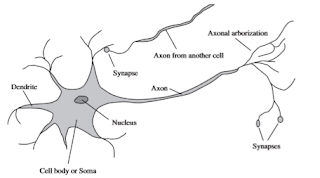
Neuroscience is the study of the nervous system, particularly the brain. Although the exact way in which the brain enables thought is one of the great mysteries of science, the fact that it does enable thought has been appreciated for thousands of years because of the evidence that strong blows to the head can lead to mental incapacitation. It has also long been known that human brains are somehow different; in about 335 B.C. Aristotle wrote, “Of all the animals, man has the largest brain in proportion to his size.”5 Still, it was not until the middle of the 18th century that the brain was widely recognized as the seat of consciousness. Before then, candidate locations included the heart and the spleen. Paul Broca’s (1824–1880) study of aphasia (speech deficit) in brain-damaged patients in 1861 demonstrated the existence of localized areas of the brain responsible for specific cognitive functions. In particular, he showed that speech production was localized to the portion of the left hemisphere now called Broca’s area.6 By that time, it was known that the brain consisted of nerve cells, or neurons, but it was not until 1873 that Camillo Golgi (1843–1926) developed a staining technique allowing the observation of individual neurons in the brain (see Figure 1.2). This technique was used by Santiago Ramon y Cajal (1852– 1934) in his pioneering studies of the brain’s neuronal structures.7 Nicolas Rashevsky (1936, 1938) was the first to apply mathematical models to the study of the nervous sytem.

We now have some data on the mapping between areas of the brain and the parts of the body that they control or from which they receive sensory input. Such mappings are able to change radically over the course of a few weeks, and some animals seem to have multiple maps. Moreover, we do not fully understand how other areas can take over functions when one area is damaged. There is almost no theory on how an individual memory is stored. The measurement of intact brain activity began in 1929 with the invention by Hans Berger of the electroencephalograph (EEG).

The recent development of functional magnetic resonance imaging (fMRI) (Ogawa et al., 1990; Cabeza and Nyberg, 2001) is giving neuroscientists unprecedentedly detailed images of brain activity, enabling measurements that correspond in interesting ways to ongoing cognitive processes. These are augmented by advances in single-cell recording of neuron activity. Individual neurons can be stimulated electrically, chemically, or even optically (Han and Boyden, 2007), allowing neuronal input– output relationships to be mapped. Despite these advances, we are still a long way from understanding how cognitive processes actually work.

The only real alternative theory is mysticism: that minds operate in some mystical realm that is beyond physical science. Brains and digital computers have somewhat different properties. Figure 1.3 shows that computers have a cycle time that is a million times faster than a brain. The brain makes up for that with far more storage and interconnection than even a high-end personal computer, although the largest supercomputers have a capacity that is similar to the brain’s. (It should be noted, however, that the brain does not seem to use all of its neurons simultaneously.) Futurists make much of these numbers, pointing to an approaching singularity at which computers reach a superhuman level of performance (Vinge, 1993; Kurzweil, 2005), but the raw comparisons are not especially informative. Even with a computer of virtually unlimited capacity, we still would not know how to achieve the brain’s level of intelligence.

Economics as The Foundamental

Economics
• How should we make decisions so as to maximize payoff?
• How should we do this when others may not go along?
• How should we do this when the payoff may be far in the future?

The science of economics got its start in 1776, when Scottish philosopher Adam Smith (1723–1790) published An Inquiry into the Nature and Causes of the Wealth of Nations. While the ancient Greeks and others had made contributions to economic thought, Smith was the first to treat it as a science, using the idea that economies can be thought of as consisting of individual agents maximizing their own economic well-being. Most people think of economics as being about money, but economists will say that they are really studying how people make choices that lead to preferred outcomes. When McDonald’s offers a hamburger foradollar, they areasserting that theywould preferthe dollarand hoping thatcustomers will prefer the hamburger. The mathematical treatment of “preferred outcomes” or utility was first formalized by L´eon Walras (pronounced “Valrasse”) (1834-1910) and was improved by Frank Ramsey (1931) and later by John von Neumann and Oskar Morgenstern in their book The Theory of Games and Economic Behavior (1944). Decision theory, which combines probability theory with utility theory, provides a for-malandcompleteframeworkfordecisions (economicorotherwise)madeunderuncertainty— that is, in cases where probabilistic descriptions appropriately capture the decision maker’s environment. This is suitable for “large” economies where each agent need pay no attention to the actions of other agents as individuals. For “small” economies, the situation is much more like a game: the actions of one player can significantly affect the utility of another (either positively or negatively). Von Neumann and Morgenstern’s development of game theory (see also Luce and Raiffa, 1957) included the surprising result that, for some games a rational agent should adopt policies that are (or least appear to be) randomized. Unlike decision theory, game theory does not offer an unambiguous prescription for selecting actions. For the most part, economists did not address the third question listed above, namely, how to make rational decisions when payoffs from actions are not immediate but instead result from several actions taken in sequence. This topic was pursued in the field of operations research, which emerged in World War II from efforts in Britain to optimize radar installations, and later found civilian applications in complex management decisions. The work of Richard Bellman (1957) formalized a class of sequential decision problems called Markov decision processes, which we study in Chapters 17 and 21.

Work in economics and operations research has contributed much to our notion of rational agents, yet for many years AI research developed along entirely separate paths. One reason was the apparent complexity of making rational decisions. The pioneering AI researcher Herbert Simon (1916–2001) won the Nobel Prize in economics in 1978 for his early work showing that models based on satisficing—making decisions that are “good enough,” rather than laboriously calculating an optimal decision—gave a better description of actual human behavior (Simon, 1947). Since the 1990s, there has been a resurgence of interest in decision-theoretic techniques for agent systems (Wellman, 1995).

THE FOUNDATIONS OF ARTIFICIAL INTELLIGENCE

Philosophy
• Can formal rules be used to draw valid conclusions?
• How does the mind arise from a physical brain?
• Where does knowledge come from?
• How does knowledge lead to action?

Aristotle (384–322 B.C.), whose bust appears on the front cover of this book, was the first to formulate a precise set of laws governing the rational part of the mind. He developed an informal system of syllogisms for proper reasoning, which in principle allowed one to generate conclusions mechanically, given initial premises. Much later, Ramon Lull (d. 1315) had the idea that useful reasoning could actually be carried out by a mechanical artifact. Thomas Hobbes (1588–1679) proposed that reasoning was like numerical computation, that “we add and subtract in our silent thoughts.” The automation of computation itself was already well under way. Around 1500, Leonardo da Vinci (1452–1519) designed but did not build a mechanical calculator; recent reconstructions have shown the design to be functional. The first known calculating machine was constructed around 1623 by the German scientist Wilhelm Schickard (1592–1635), although the Pascaline, built in 1642 by Blaise Pascal (1623–1662), is more famous. Pascal wrote that “the arithmetical machine produces effects which appear nearer to thought than all the actions of animals.” Gottfried Wilhelm Leibniz (1646–1716) built a mechanical device intended to carry out operations on concepts rather than numbers, but its scope was rather limited. Leibniz did surpass Pascal by building a calculator that could add, subtract, multiply, and take roots, whereas the Pascaline could only add and subtract. Some speculated that machines might not just do calculations but actually be able to think and act on their own. In his 1651 book Leviathan, Thomas Hobbes suggested the idea of an “artificial animal,” arguing “For what is the heart but a spring; and the nerves, but so many strings; and the joints, but so many wheels.”

It’sonethingtosaythatthemindoperates, atleastinpart, according tologicalrules,and to build physical systems that emulate some of those rules; it’s another to say that the mind itself is such a physical system. Ren´e Descartes (1596–1650) gave the first clear discussion of the distinction between mind and matter and of the problems that arise. One problem with a purely physical conception of the mind is that it seems to leave little room for free will: if the mind is governed entirely by physical laws, then it has no more free will than a rock “deciding” tofalltowardthe centerofthe earth. Descartes wasastrong advocate ofthepower of reasoning in understanding the world, a philosophy now called rationalism, and one that counts Aristotle and Leibnitz as members. But Descartes was also a proponent of dualism.

He held that there is a part of the human mind (or soul or spirit) that is outside of nature, exempt from physical laws. Animals, on the other hand, did not possess this dual quality; they could be treated as machines. An alternative to dualism is materialism, which holds that the brain’s operation according to the laws of physics constitutes the mind. Free will is simply the way that the perception of available choices appears to the choosing entity.

Given a physical mind that manipulates knowledge, the next problem is to establish the source of knowledge. The empiricism movement, starting with Francis Bacon’s (1561–EMPIRICISM 1626) Novum Organum,2 is characterized by a dictum of John Locke (1632–1704): “Nothing is in the understanding, which was not first in the senses.” David Hume’s (1711–1776) A Treatise of Human Nature (Hume, 1739) proposed what is now known as the principle of induction: that general rules are acquired by exposure to repeated associations between theirelements. Building on the work of Ludwig Wittgenstein (1889–1951) and Bertrand Russell (1872–1970), the famous Vienna Circle, led by Rudolf Carnap (1891–1970), developed the doctrine of logicalpositivism. Thisdoctrine holds thatallknowledge canbecharacterized by logical theories connected, ultimately, to observation sentences that correspond to sensory inputs; thuslogical positivismcombines rationalism andempiricism.3 Theconfirmationtheory of Carnap and Carl Hempel (1905–1997) attempted to analyze the acquisition of knowl-CONFIRMATION THEORY edge from experience. Carnap’s book The Logical Structure of the World (1928) defined an explicit computational procedure for extracting knowledge from elementary experiences. It was probably the first theory of mind as a computational process.

Intelligent Agents

INTRODUCTION

An agents ia anything that can be viewed  as Perceiving its environment  through sensors and acting upon that environment through effectors. A human agent has eyes, ears, and other organs for sensors, and hands, legs, mouth, and other body parts for effectors.

A robotic agent substitutes cameras and infrared range finders for the sensors and various motors for the effectors. A software agent has encoded  bit strings as its percepts and actions. A generic agent is diagrammed.


Our aims in this blog is to design agents that do a good job of acting on their environment. First, we will be a little more precise about what we mean by a good job. Then we will talk about different designs for successfull agent-filling in the question mark.

We discuss some of the generap principles useeeed in the design of agents throughout the blog, chief among which is the principle that agents should know things.

The Foundations of The Artificial Intelligence

SUMMARY


This chapter define AI and establishes the cultural background against which it has developed. Some of the important points are as follows:
  • Different people think of AI differently.
  • In this blog, we adopt the view that intelligence is concerned mainly with rational action.
  • Philosophers made AI conceivable by considering the ideas that the mind is in some ways like a machine, that  is operates on knowledge encoded in some internal language.
  • Mathematicians provided the tools to manipulate statements of logical certainly as well as uncertain.
  • Psychologists strengthened in idea that humans and other animals can be considered information proccessing machines
  • Computer Enginering provided the artifact that makes AI applications possible
  • The history of AI had cycles of success
  • Recent progress in understanding the theoritical basis for intelligence has gone hand in hand with improvements in the capabilities of real systems.

What is AI?

We have know why AI is exciting, but we have not said what it is. We could jus say "Well, it has to do with smart programs, so lets go on and write some". But the history of science shows that it is helpfull to aim the right goals.


Early Alchemist, looking for a potion for external life and a method to turn lead into gold, were probably off on the wrong foot. Only when the aim changed, to that of finding explicit theories that gave accurate predictions of the terrestial world.

In the same way that early astronomy predicted the apparent motions of the stars and planets, could the scientific method emerge and productive science take place.

Definitions of artificial intelligence according to eight recent textbooks are shows in Figure. these definitions very along two main dimensions. The ones on top are concerned with thought processes and reasoning, whereas the ones on the bottom address behaviour, also the definitions on the left measure success in terms of human performance, whereas the ones on the left measure success in terms of human performance